In today’s digital world, social media is often the first interaction people have with a brand.
Before visiting a website, making a purchase, or sending an inquiry, customers usually discover businesses through Instagram reels, LinkedIn posts, YouTube Shorts, or TikTok videos.
And because of this shift, many brands have become obsessed with one thing:
Looking good online.
Perfect feeds, cinematic reels, trendy transitions, luxury aesthetics, and viral edits dominate social media today. But while brands focus heavily on visuals, many forget the one thing that actually drives long-term growth:
Strategy.
Aesthetic may attract attention temporarily.
But strategy is what builds trust, creates connection, and converts audiences into loyal customers.
That is exactly where most brands get social media marketing wrong.
The Rise of “Pretty Content” Culture
Scroll through any social media platform today and you will notice a pattern.
Brands are investing heavily in visuals designed to impress audiences instantly.
Why Visually Attractive Content Is Not Enough
Many businesses focus on:
- Minimalistic Instagram grids
- Trending audio reels
- Cinematic transitions
- Luxury aesthetics
- High-quality photography
- Perfect color palettes
At first glance, everything looks polished and professional.
But once you look deeper, the results often tell a different story:
- Low engagement rates
- Weak audience retention
- Poor conversion rates
- Inconsistent messaging
- Lack of emotional connection
The problem is not the visuals themselves.
The problem is that the content is designed to look impressive rather than communicate value.
The Problem With Social Media Perfection
Today’s audiences are smarter than ever.
People can instantly recognize when content feels overly curated, trend-dependent, or empty behind the visuals.
Aesthetic content may attract viewers temporarily.
But strategic content creates lasting impact.
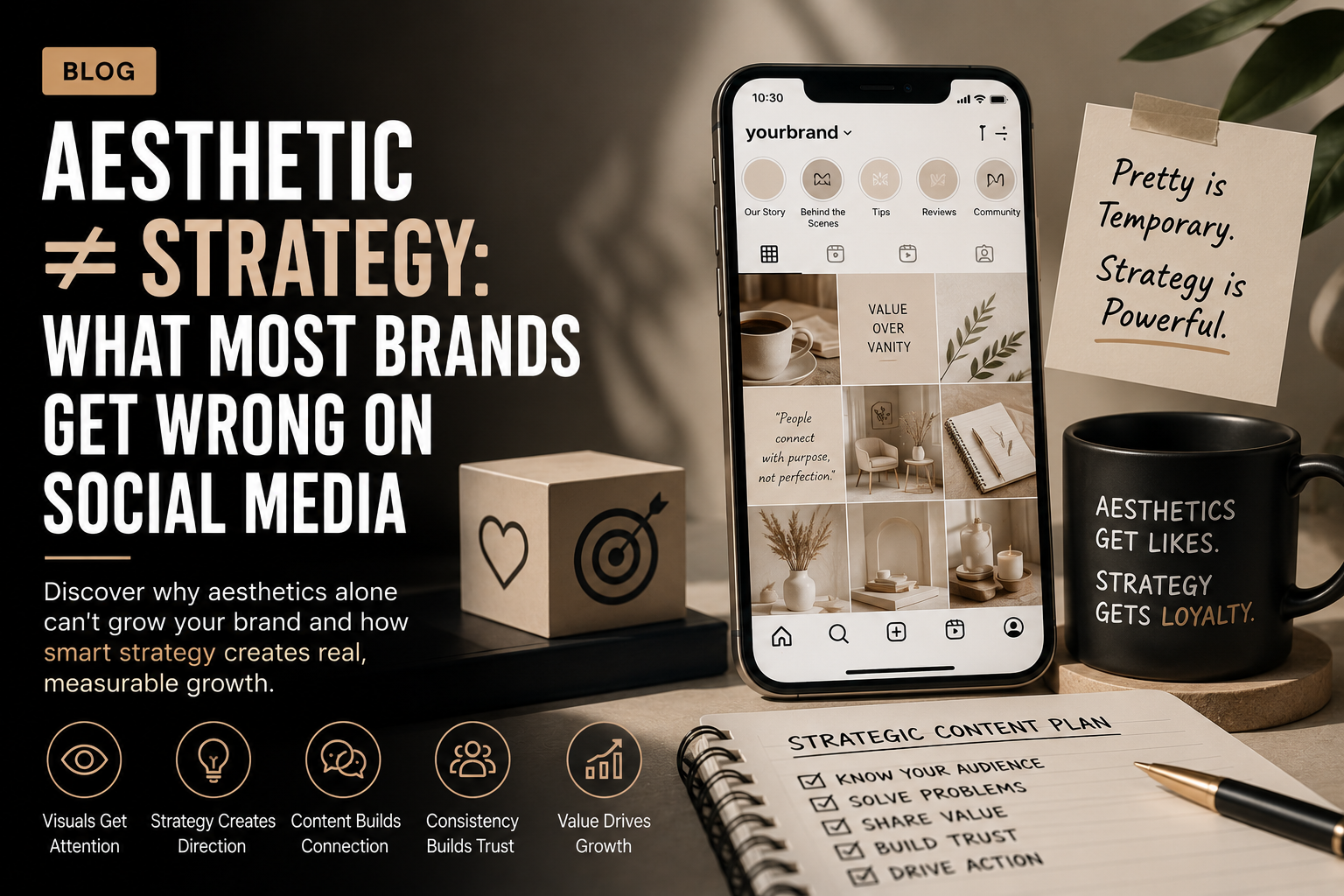
Aesthetic Gets Attention. Strategy Builds Brands.
Aesthetic matters.
There is no denying that strong visuals help brands stand out in crowded social feeds.
But attention alone does not build businesses.
The Difference Between Visual Appeal and Strategic Marketing
Think of aesthetics as packaging.
Strategy is the substance inside.
A visually pleasing reel may stop someone from scrolling for two seconds. But strategy determines whether that person:
- Remembers your brand
- Understands your value
- Trusts your business
- Engages with your content
- Becomes a customer
Without strategy, content becomes decoration instead of communication.
And decoration rarely creates meaningful business growth.
That balance is what modern agencies like The So Social focus on — creating content that is not only visually appealing but also strategically meaningful.
Why Brand Positioning Matters More Than Trends
Strong brands do not rely only on trends for visibility.
They create a clear identity, consistent messaging, and recognizable positioning that audiences remember long after the trend disappears.
The Biggest Mistake Brands Make on Social Media
One of the most common mistakes businesses make today is confusing trends with strategy.
Chasing Trends Without Brand Clarity
A trending audio becomes the content plan.
A viral editing style becomes the brand identity.
Aesthetic imitation replaces originality.
The problem is that trends create visibility — not positioning.
When brands constantly chase trends without clarity, audiences stop understanding what the brand actually stands for.
And once brand clarity disappears, trust weakens.
Why Viral Content Does Not Always Convert
A viral reel may generate millions of views.
But views alone do not guarantee:
- Brand recall
- Customer loyalty
- Meaningful engagement
- Business growth
Strategic marketing focuses on long-term trust instead of temporary visibility.
What Strategic Social Media Content Actually Looks Like
Many people assume strategic content must always be highly produced or complicated.
That is not true.
In fact, some of the most effective content online is surprisingly simple.
Examples of Strategic Content
Customer Storytelling
Sharing relatable customer experiences that build emotional trust.
Educational Content
Helping audiences learn something useful through carousels, tips, or insights.
Behind-the-Scenes Content
Showing the human side of the brand to build authenticity.
Opinion-Led Content
Sharing strong perspectives that help establish brand authority.
Why Intention Matters More Than Editing
What makes content effective is not the editing style.
It is the clarity behind the message.
Every successful piece of content answers at least one important question:
- What should the audience feel?
- What should they remember?
- What value are they gaining?
- What action should they take next?
Brands that understand this create content with purpose instead of posting randomly for visibility.
Why Some Brands Grow Faster Than Others
You may have noticed that some brands with average visuals still outperform brands with expensive production quality.
Why?
Because clarity beats complexity.
Authenticity vs Over-Curated Content
Modern audiences are moving away from perfection.
People connect more with content that feels:
- Human
- Relatable
- Authentic
- Emotionally relevant
Overly polished content often feels distant and impersonal.
Why Audiences Connect With Relatable Brands
A café posting aesthetic coffee shots daily may look visually appealing.
But if the content never communicates the atmosphere, customer stories, or brand personality, audiences eventually lose interest.
Meanwhile, brands with authentic storytelling and clear messaging often build stronger loyalty.
That is the power of strategy.
Social Media Marketing Is Psychology, Not Just Design
The strongest brands understand that social media is not just about posting content.
It is about shaping perception.
The Role of Consumer Psychology in Content Marketing
Successful marketing combines:
- Consumer psychology
- Storytelling
- Audience understanding
- Emotional triggers
- Brand positioning
- Consistent communication
Because at its core, marketing is not about getting views.
It is about creating meaning.
Emotional Connection and Brand Recall
People may forget visuals quickly.
But they remember brands that made them feel understood.
That emotional connection is what creates long-term brand recall and customer trust.
The Future of Social Media Marketing
Social media is evolving rapidly.
Audiences are becoming more selective about the content they engage with.
Why Audiences Prefer Authentic Brands Today
People are moving away from overly polished perfection and toward brands that feel genuine and relatable.
Today, audiences value:
- Honest communication
- Useful insights
- Emotional storytelling
- Authentic experiences
- Clear brand identity
The Shift Toward Strategic Storytelling
Brands that rely only on aesthetics may still gain temporary attention.
But brands that focus on strategic storytelling build communities.
It is the reason why businesses today are shifting toward more intentional and audience-focused communication approaches — something The So Social strongly emphasizes in its content philosophy.
And communities build sustainable businesses.
How Brands Can Build Better Social Media Strategy
If brands want stronger long-term results on social media, they need to stop asking only:
“Does this content look good?”
And start asking deeper questions.
Questions Every Brand Should Ask Before Posting
- Does this content solve a problem?
- Does it reflect our brand identity?
- Will the audience remember this?
- Does it create trust?
- Is there a purpose behind it?
How To Create Intentional Content
Successful social media marketing is not about posting more content.
It is about posting intentional content that aligns with audience needs, business goals, and brand positioning.
Frequently Asked Questions (FAQs)
What is the difference between aesthetic and strategy in social media marketing?
Aesthetic focuses on how content looks, while strategy focuses on why the content is being created and what business goal it serves. Strong social media marketing requires both visual appeal and purposeful communication.
Why do visually attractive brands fail on social media?
Many brands focus only on design and trends without understanding audience behavior, brand positioning, or content strategy. As a result, they gain temporary attention but struggle with engagement, trust, and conversions.
Is aesthetic content important for social media growth?
Yes, aesthetics help attract attention and create a strong first impression. However, without strategy, aesthetic content alone cannot build long-term customer relationships or sustainable brand growth.
What makes social media content strategic?
Strategic content is created with a clear purpose. It aims to educate, inspire, engage, build trust, or drive action while aligning with the brand’s overall marketing goals and audience needs.
How can brands improve their social media strategy?
Brands can improve their strategy by understanding their target audience, creating consistent messaging, focusing on storytelling, analyzing audience behavior, and producing content that delivers value instead of simply following trends.
Why is storytelling important in social media marketing?
Storytelling helps brands create emotional connections with audiences. People are more likely to remember and trust brands that communicate relatable experiences, values, and authentic messages.
Final Thoughts
Aesthetic matters.
Visual appeal will always play an important role in capturing attention online.
But attention alone is not enough anymore.
The brands that truly grow on social media are the ones that combine creativity with strategy, visuals with value, and storytelling with purpose.
Because at the end of the day:
People may admire aesthetics.
But they follow clarity, trust consistency, and remember brands that make them feel understood.