Viral Marketing Is Not Luck Anymore
Every time a campaign goes viral, people usually say the same thing:
- Lucky trend
- Perfect timing
- It blew up overnight
But the reality is very different.
Most people think viral campaigns happen by accident. But in 2026, virality is engineered through psychology, timing, audience understanding, and strategic storytelling.
Behind almost every successful viral campaign is a carefully planned marketing strategy that audiences rarely notice.
Virality may look spontaneous on social media, but the best-performing campaigns are built through audience psychology, storytelling, timing, platform behavior, and consistent brand positioning.
Today, brands are realizing that viral marketing is not about randomly chasing trends. It is about understanding people, creating emotional connection, and delivering content that feels culturally relevant at the right moment.
That is why strategy-first digital marketing agencies like The So Social focus heavily on audience behavior, creative direction, and platform-specific storytelling before creating content.
Why Viral Campaigns Work So Well
Most viral campaigns succeed because they trigger emotion.
People do not share content randomly. They share content that makes them feel something.
Successful campaigns often make audiences:
- Laugh
- Relate
- Feel inspired
- Feel included
- Feel surprised
- Feel emotionally connected
This emotional response drives shares, comments, saves, and conversations.
A viral campaign is rarely just about aesthetics or expensive production. It is about creating content powerful enough for people to pass it on naturally.
According to multiple social media engagement studies, emotionally driven content consistently performs better than purely promotional advertising because audiences connect more deeply with relatable experiences and authentic storytelling.
In 2026, emotional relevance performs better than overly polished advertising.
Brands that understand emotional marketing create campaigns that audiences genuinely remember.
Emotional Marketing Drives Shares
The strongest social media strategy today focuses on human behavior rather than aggressive promotion.
People engage with content when it feels personal, authentic, and culturally relevant.
That is why successful brands invest heavily in:
- Audience engagement
- Brand storytelling
- Community-driven content
- Relatable messaging
- Content marketing strategies
The more emotionally connected audiences feel, the more likely they are to share the campaign organically.
The Hidden Role of Timing in Viral Marketing
Timing is one of the most underrated marketing strategies behind viral content.
Brands that consistently go viral usually understand:
Current Internet Conversations
They know what audiences are already discussing online and how to enter conversations naturally without sounding forced.
Platform Behavior
Every social media platform pushes different types of content. What performs on Instagram may fail on LinkedIn or X.
Audience Mood
Smart marketers understand cultural mood shifts and online sentiment before launching campaigns.
Trend Lifecycles
Some trends peak within hours while others continue growing for weeks. Successful brands know the difference.
A campaign posted at the right moment can create massive engagement. The same campaign posted too late may completely fail.
Virality is not only about creativity.
It is about relevance.
Simplicity Wins on Social Media in 2026
Many businesses overcomplicate their marketing campaigns.
But most viral campaigns are surprisingly simple.
Why?
Because modern audiences consume content extremely fast.
The strongest campaigns usually have:
- One clear message
- Simple storytelling
- Easy-to-understand visuals
- Relatable communication
- Strong emotional hooks
If audiences cannot immediately understand the content, they scroll past it.
Short attention spans have made clarity one of the most valuable digital marketing strategies today.
The brands performing best online are not always the loudest. They are often the clearest.
Audience Understanding Is the Real Secret Behind Virality
The campaigns that truly perform well are built for a specific audience instead of trying to reach everyone.
Successful brands deeply understand:
- What their audience finds relatable
- What language they use
- What problems they face
- What humor they enjoy
- What emotions drive engagement
This is why some campaigns explode online while others disappear instantly.
The difference is not always budget.
The real difference is audience understanding.
Brands that know their audience create content that feels personal rather than promotional.
Instead of sounding like advertisements, their campaigns feel like conversations people actually want to engage with.
This audience-first approach has become one of the biggest competitive advantages in digital marketing in 2026.
Consistency Creates Viral Brands
One viral post rarely builds a successful business.
Most brands that experience long-term viral growth have already spent months or years building:
- Brand identity
- Audience trust
- Content consistency
- Community engagement
- Recognizable storytelling
What audiences often call overnight success is usually the result of long-term strategic execution.
Virality becomes more sustainable when people already recognize and trust the brand behind the content.
This is why consistent content marketing matters so much. Every post, campaign, reel, and interaction contributes to how audiences remember a brand over time.
Brands that disappear for weeks and suddenly chase trends rarely build lasting engagement.
Consistency creates familiarity. Familiarity creates trust. Trust creates growth.
Why Strategy Matters More Than Trends
Many businesses focus only on trends.
But trends alone do not build lasting growth.
Without strategy, viral moments fade quickly.
Strong brands combine:
Creative Storytelling
Content that feels natural, emotional, and relatable.
Platform Understanding
Knowing how different social media platforms reward different content styles.
Consistent Branding
Maintaining recognizable communication, visuals, and messaging.
Data-Driven Decisions
Using analytics and audience insights to improve campaign performance continuously.
The brands dominating social media in 2026 are not simply posting content every day.
They are building systems for long-term engagement, audience retention, meaningful audience engagement, and sustainable online brand growth.
The Future of Viral Marketing
The future of viral marketing is shifting away from random visibility and toward intentional connection.
Audiences today are smarter, faster, and more selective than ever before.
People no longer engage with content simply because it is trending. They engage with content that feels authentic, relatable, emotionally relevant, and valuable.
This is changing how brands approach digital marketing.
Businesses that focus only on chasing views may experience temporary spikes in attention, but brands that focus on strategy build long-term audience loyalty.
Modern social media strategy is no longer just about visibility. It is about creating memorable brand experiences that audiences genuinely care about.
In 2026, successful marketing is not just about reaching people.
It is about staying memorable after the trend disappears.
Final Thoughts
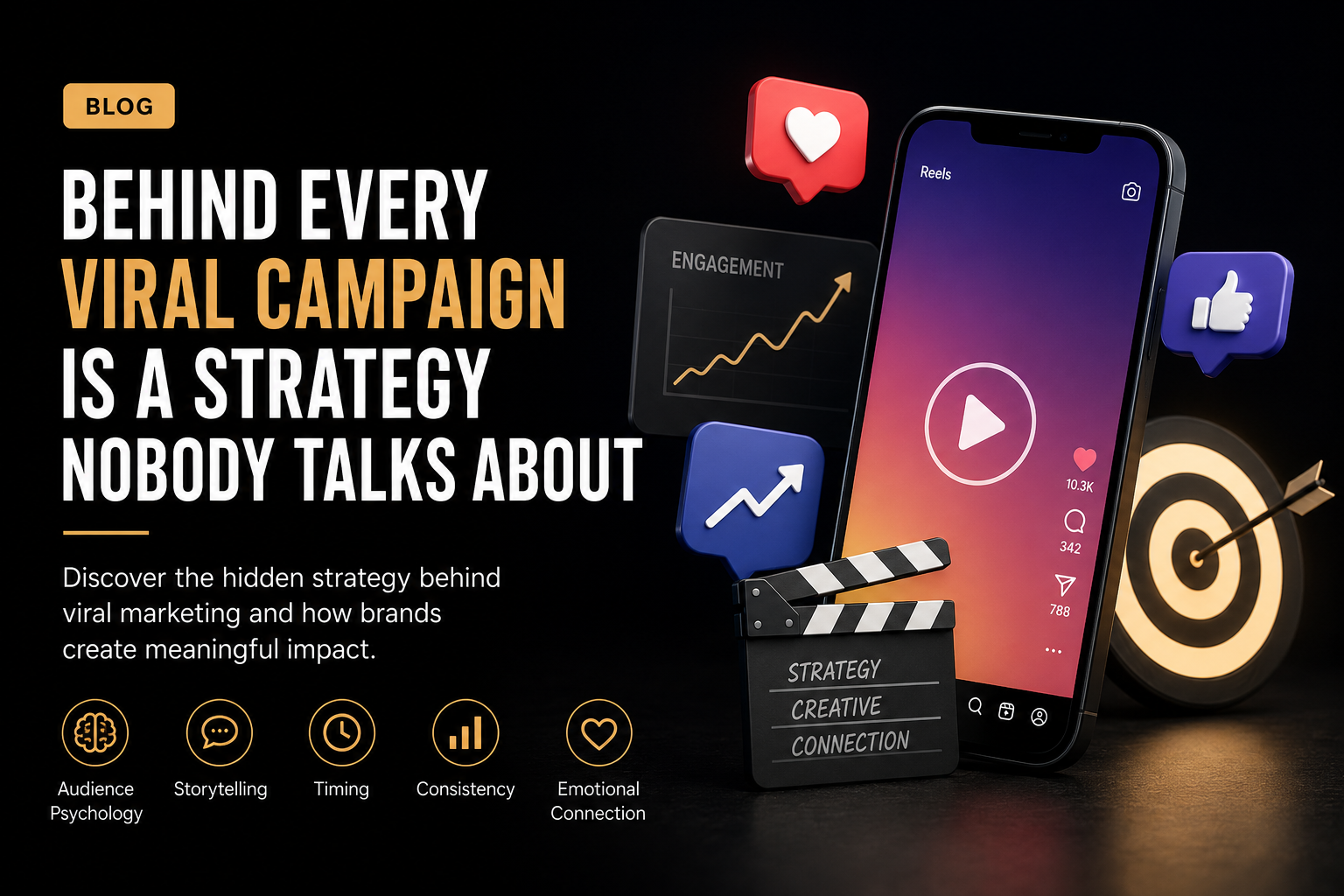
Behind every viral campaign is a strategy most people never notice.
The strongest campaigns are not driven only by trends or luck. They are built through audience understanding, emotional storytelling, timing, simplicity, and consistent brand positioning.
Brands that succeed online today are not simply creating content.
They are creating connection.
The brands winning online today are not chasing virality. They are strategically building attention, trust, and emotional connection at scale.
And businesses that adopt a strategy-first approach to digital marketing will continue shaping the future of social media growth.
Frequently Asked Questions
What makes a marketing campaign go viral?
A viral marketing campaign usually succeeds because it creates strong emotional engagement, relatable storytelling, and timely content that audiences naturally want to share.
Is viral marketing only about trends?
No. Trends can increase visibility, but successful viral campaigns are usually backed by strategy, audience research, storytelling, and platform understanding.
Why is audience understanding important in digital marketing?
Audience understanding helps brands create content that feels personal and relatable. Campaigns perform better when businesses understand audience behavior, emotions, and interests.
Does every business need viral content?
Not necessarily. Consistent and valuable content often delivers stronger long-term business results than constantly chasing virality.
What platforms work best for viral marketing in 2026?
Instagram, TikTok, YouTube Shorts, LinkedIn, and X continue to dominate viral content, but success depends on matching the content style to the platform audience.
How does The So Social approach viral marketing?
The So Social follows a strategy-first approach by combining audience research, storytelling, creative direction, and platform insights to create content designed for meaningful engagement and sustainable brand growth.